Best Solar Generators for Off-Grid Power in 2026 (Expert Picks)
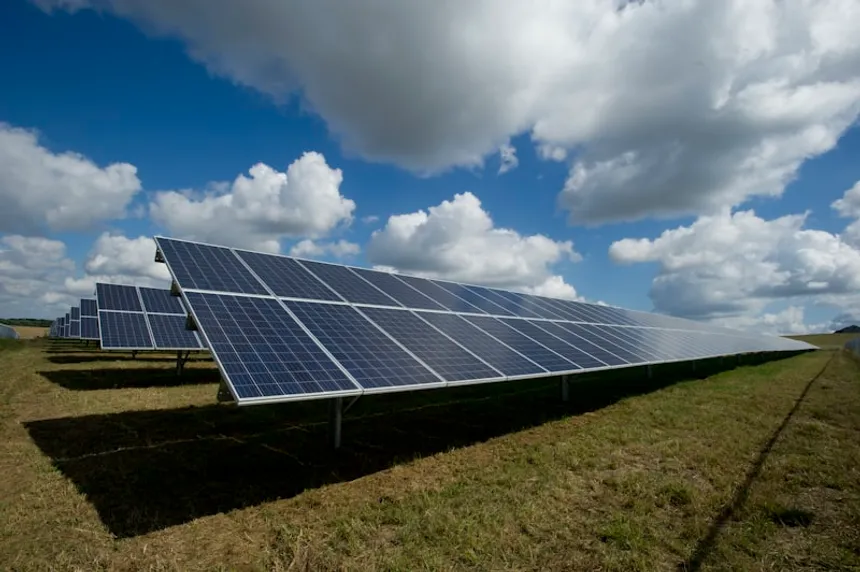
After researching dozens of models and comparing real-world specs, solar charging speeds, expandability, and value, here are the best solar generators for off-grid power in 2026. (Looking for general portable power station picks? See our best portable power stations of 2026 guide.)
Table of Contents
- Quick Comparison Table
- 1. EcoFlow Delta Pro 3 — Best Overall Solar Generator
- 2. Bluetti Apex 300 — Best for Serious Off-Grid Systems
- 3. Jackery Explorer 2000 Plus — Best Expandable Solar Generator
- 4. Bluetti AC200L — Best Mid-Range Solar Generator
- 5. EcoFlow Delta 3 — Best Compact Solar Generator
- 6. Anker SOLIX F3800 — Best for Whole-Home Off-Grid Backup
- 7. Jackery Explorer 1000 v2 — Best Budget Solar Generator
- How to Choose a Solar Generator for Off-Grid Use
- Solar Panel Pairing Guide
- FAQ
Quick Comparison Table
| Solar Generator | Capacity | Output | Solar Input | Battery Type | Weight | Price (est.) |
|---|---|---|---|---|---|---|
| EcoFlow Delta Pro 3 | 4,096Wh | 4,000W | 2,600W max | LiFePO4 | 114 lbs | ~$2,399 |
| Bluetti Apex 300 | 2,764.8Wh | 3,840W | 1,200W max | LiFePO4 | 75 lbs | ~$1,999 |
| Jackery Explorer 2000 Plus | 2,042Wh | 3,000W | 1,200W max | LiFePO4 | 61.5 lbs | ~$1,099 |
| Bluetti AC200L | 2,048Wh | 2,400W | 1,200W max | LiFePO4 | 62 lbs | ~$1,199 |
| EcoFlow Delta 3 | 1,024Wh | 1,800W | 1,000W max | LiFePO4 | 29 lbs | ~$799 |
| Anker SOLIX F3800 | 3,840Wh | 6,000W | 2,400W max | LiFePO4 | 132 lbs | ~$2,999 |
| Jackery Explorer 1000 v2 | 1,070Wh | 1,500W | 500W max | LiFePO4 | 24.2 lbs | ~$599 |
1. EcoFlow Delta Pro 3 — Best Overall Solar Generator
Target audience: Off-grid cabins, long-term RV living, serious emergency backup
The EcoFlow Delta Pro 3 is the gold standard for solar generators heading into 2026. With a massive 4,096Wh LiFePO4 battery, 4,000W pure sine wave inverter, and an industry-leading 2,600W maximum solar input, this unit can recharge from empty to full in under two hours with a large solar array. That’s faster than most people’s phones charge relative to capacity.
Key Specs
- Battery capacity: 4,096Wh (expandable to 12kWh+ with extra batteries)
- AC output: 4,000W rated (8,000W surge)
- Solar input: 2,600W max via dual MPPT controllers
- Battery type: LiFePO4 (3,500+ cycles to 80%)
- Charging speed: ~1.5 hours from solar at max input, ~2.4 hours via AC wall
- Ports: 5× AC outlets, 2× USB-C (140W), 2× USB-A, 1× car outlet, 1× Anderson connector
- Weight: 114 lbs
- App control: Yes (EcoFlow app, Wi-Fi + Bluetooth)
- Warranty: 5 years
Why It’s Great for Off-Grid
The Delta Pro 3’s dual MPPT charge controllers are the killer feature here. Most power stations have a single MPPT controller that tops out at 400–1,200W of solar input. The Delta Pro 3 accepts up to 2,600W, meaning you can connect a serious solar array and replenish this massive battery in well under two hours — even on a partly cloudy day, you’ll still pull meaningful power.
EcoFlow’s X-Stream charging technology optimizes the charge curve to maximize solar harvest while protecting battery health. The LiFePO4 cells are rated for 3,500+ cycles to 80% capacity, which translates to roughly a decade of daily use.
For off-grid cabin setups, the Delta Pro 3 can integrate with EcoFlow’s Smart Home Panel 2 for automatic switchover during outages. It supports 120V/240V output (with two units linked), so you can run heavy appliances like well pumps and central air conditioning.
What Could Be Better
At 114 pounds, this is not a grab-and-go unit. You’ll want a cart or a buddy to move it. It’s also the most expensive option on this list, though the price per watt-hour is actually reasonable given the premium solar input and build quality.
Verdict: If you’re building a serious off-grid solar system and want the fastest solar charging available in a portable form factor, the Delta Pro 3 is the unit to beat.
[Check Price on EcoFlow] | [Check Price on Amazon]
2. Bluetti Apex 300 — Best for Serious Off-Grid Systems
Target audience: Off-grid homes, workshops, heavy-duty applications
Bluetti’s Apex 300 is a powerhouse that bridges the gap between portable power stations and permanent home battery installations. With 2,764.8Wh of LiFePO4 capacity, a beefy 3,840W inverter, and native 120V/240V split-phase output from a single unit, this is built for people who need real, usable household power off-grid.
Key Specs
- Battery capacity: 2,764.8Wh (expandable to 13kWh+ with B300K/B500K batteries)
- AC output: 3,840W rated (7,200W surge)
- Solar input: 1,200W max
- Battery type: LiFePO4 (3,500+ cycles to 80%)
- 120V/240V: Yes, single unit — no pairing needed
- Ports: 4× AC outlets (120V), 1× NEMA L14-30 (240V), 2× USB-C (140W), 2× USB-A, 1× car outlet
- Weight: ~75 lbs
- App control: Yes (Bluetti app, Wi-Fi + Bluetooth)
- Warranty: 5 years
Why It’s Great for Off-Grid
The Apex 300’s standout feature is native 240V output from a single unit. Most competitors require you to buy two units and link them to get 240V — that’s double the cost and complexity. The Apex 300 does it alone, making it the go-to for powering 240V appliances like dryers, welders, or RV air conditioners off-grid.
Expandability is exceptional. Pair it with B300K expansion batteries (2,764.8Wh each) or the newer B500K modules (5,120Wh each) and you can build a system exceeding 13kWh. For an off-grid cabin, that’s enough to run a refrigerator, lights, router, and charge devices for two or three days without any sun at all.
Solar input caps at 1,200W, which is lower than the Delta Pro 3 but still very fast — you can fully recharge the base unit in about 2.5 hours under ideal conditions.
What Could Be Better
At 75 pounds, it’s heavy but manageable with two people or a cart. The price is premium, though the 240V output and expandability justify it for serious setups. The interface can feel slightly less polished than EcoFlow’s app ecosystem.
Verdict: The best choice if you need 240V output without buying two units, and want a truly expandable system for long-term off-grid living.
[Check Price on Bluetti] | [Check Price on Amazon]
3. Jackery Explorer 2000 Plus — Best Expandable Solar Generator
Target audience: Campers, RV owners, and preppers who want to start small and scale up
The Jackery Explorer 2000 Plus hit the market as Jackery’s first LiFePO4 power station and it remains one of the best values for off-grid solar power. With 2,042Wh of base capacity, expandability up to a staggering 24kWh, and Jackery’s IBC solar panel technology, it’s a modular system that grows with your needs.
Key Specs
- Battery capacity: 2,042Wh (expandable to 24,000Wh with Battery Pack 2000 Plus modules)
- AC output: 3,000W rated (6,000W surge, dual unit)
- Solar input: 1,200W max (6× SolarSaga 200W panels)
- Battery type: LiFePO4 (4,000 cycles to 70%)
- Charging speed: ~2 hours via solar (6× 200W panels), ~2 hours via AC
- Ports: 5× AC outlets, 2× USB-C (100W), 2× USB-A (18W), 1× car outlet
- Weight: 61.5 lbs
- App control: Yes (Jackery app)
- Warranty: 5 years (3+2 extended)
Why It’s Great for Off-Grid
The Explorer 2000 Plus is modular in a way that few competitors match. Each Battery Pack 2000 Plus adds another 2,042Wh, and you can stack up to five packs on a single unit for a total of 24kWh. That’s enough off-grid capacity for a small home.
Jackery’s newer SolarSaga panels use IBC (Interdigitated Back Contact) cell technology with bifacial energy generation, meaning they capture light from both sides and perform better in low-light conditions. The 200W panels are lightweight (about 13.7 lbs each) and fold quickly for transport.
The ChargeShield technology uses an AI-driven variable speed charging algorithm that Jackery claims extends battery life by 50% compared to traditional charging. The LiFePO4 cells are rated for an impressive 4,000 full cycles to 70% capacity — one of the longest-lasting in the industry.
At the current street price of around $1,099 (frequently discounted from the original $2,199 MSRP), this is exceptional value.
What Could Be Better
The 3,000W output is strong but falls behind the Apex 300 and Delta Pro 3 for running the most demanding appliances. No native 240V from a single unit (though you can link two for 240V/6,000W). The app, while functional, isn’t as feature-rich as EcoFlow’s or Bluetti’s.
Verdict: Best expandable system for the money. Start with the base unit for camping, add battery packs as your off-grid needs grow. The aggressive pricing makes it hard to beat on value.
[Check Price on Jackery] | [Check Price on Amazon]
4. Bluetti AC200L — Best Mid-Range Solar Generator
Target audience: Weekend off-gridders, car campers, moderate home backup
The Bluetti AC200L sits in a sweet spot: enough capacity and power for serious off-grid use without the bulk and price of the larger units. At 2,048Wh with a 2,400W inverter, it handles everything from running a mini fridge and charging laptops to powering CPAP machines and small appliances.
Key Specs
- Battery capacity: 2,048Wh (expandable to ~8,000Wh with B300K batteries)
- AC output: 2,400W rated (3,600W surge)
- Solar input: 1,200W max
- Battery type: LiFePO4 (3,500+ cycles to 80%)
- Charging speed: ~1.5 hours via AC (turbo), ~2 hours with 1,200W solar
- Ports: 4× AC outlets, 1× USB-C (100W), 1× USB-C (18W), 2× USB-A (18W), 1× wireless charging pad, 1× car outlet, 1× RV outlet (30A)
- Weight: 62 lbs
- App control: Yes (Bluetti app, Wi-Fi + Bluetooth)
- Warranty: 5 years
Why It’s Great for Off-Grid
The AC200L is Bluetti’s do-everything mid-range unit, and it does everything well. The 1,200W solar input is generous for a unit this size — pair it with two 350W panels or three 200W panels and you’ll recharge in about two hours. That’s a full recharge during a typical midday solar window, even accounting for real-world panel efficiency losses.
The built-in wireless charging pad is a nice touch for phones, and the 30A RV outlet means you can plug directly into your RV’s shore power inlet. Expandability with B300K (2,764.8Wh) or the new B500K (5,120Wh) modules means this little unit can grow into an 8,000Wh+ system.
Bluetti’s app lets you monitor power draw, set charge limits (great for battery longevity), and update firmware. The power-lifting mode temporarily boosts output to handle startup surges from high-draw appliances.
What Could Be Better
62 pounds is manageable but not light. The 2,400W continuous output won’t run power-hungry tools or large air conditioners. The wireless charging pad is convenient but slow (15W).
Verdict: The best mid-range solar generator for people who want strong solar charging, good expandability, and a price that doesn’t require a second mortgage.
[Check Price on Bluetti] | [Check Price on Amazon]
5. EcoFlow Delta 3 — Best Compact Solar Generator
Target audience: Solo campers, photographers, digital nomads, apartment dwellers
If you want portable off-grid power without lugging around 60+ pounds of battery, the EcoFlow Delta 3 is the sweet spot. At 29 pounds with 1,024Wh of LiFePO4 capacity and 1,800W output, it’s genuinely one-person portable while still packing enough punch to run real appliances.
Key Specs
- Battery capacity: 1,024Wh (expandable with EcoFlow extra battery)
- AC output: 1,800W rated (3,600W surge with X-Boost)
- Solar input: 1,000W max
- Battery type: LiFePO4 (4,000 cycles to 80%)
- Charging speed: ~56 minutes via AC, ~1.5 hours via solar (at 600W+)
- Ports: 3× AC outlets, 2× USB-C (140W + 100W), 2× USB-A, 1× car outlet
- Weight: 29 lbs
- App control: Yes (EcoFlow app, Wi-Fi + Bluetooth)
- Warranty: 5 years
Why It’s Great for Off-Grid
The Delta 3 proves you don’t need a massive system to go off-grid effectively. The 1,000W solar input is remarkable for a 1,024Wh unit — it means you can fully recharge from empty in roughly 1.5 hours with the right panel setup. For a weekend campsite where you’re running a small cooler, charging cameras, and powering a laptop, this is all you need.
EcoFlow’s X-Boost technology lets the Delta 3 handle devices up to 2,700W by dynamically adjusting voltage. This means short-duration, high-draw items like a coffee maker or hair dryer will work even though the rated output is 1,800W.
The 140W USB-C port fast-charges modern laptops directly, bypassing the inverter for better efficiency. At 29 pounds, one person can comfortably carry it with a single hand.
The 4,000-cycle LiFePO4 battery is among the longest-lasting in the compact category.
What Could Be Better
1,024Wh won’t last through heavy overnight use (no all-night fridge running). Only expandable with one extra battery, so the ceiling is limited compared to modular systems. At ~$799, it’s not the cheapest compact option, but the solar input speed justifies the premium.
Verdict: Best compact solar generator for people who prioritize portability and fast solar charging. Perfect for weekend warriors and mobile workers.
[Check Price on EcoFlow] | [Check Price on Amazon]
6. Anker SOLIX F3800 — Best for Whole-Home Off-Grid Backup
Target audience: Homeowners, off-grid properties, high-power needs
The Anker SOLIX F3800 is a monster designed for people who need to run their entire home from a battery. With 3,840Wh of LiFePO4 capacity, a 6,000W inverter, and expandability up to 26.9kWh via stacking batteries, this competes with home battery systems like the Tesla Powerwall but remains technically portable.
Key Specs
- Battery capacity: 3,840Wh (expandable to ~26.9kWh)
- AC output: 6,000W rated (12,000W surge)
- Solar input: 2,400W max
- Battery type: LiFePO4 (3,000+ cycles to 80%)
- 120V/240V: Yes (with home backup kit)
- Ports: 6× AC outlets, 4× USB-C, 2× USB-A, 1× car outlet, 1× RV outlet
- Weight: ~132 lbs
- App control: Yes (Anker app, Wi-Fi)
- Warranty: 5 years
Why It’s Great for Off-Grid
6,000W of continuous output is no joke — this runs central air conditioning, electric stoves, power tools, and multiple large appliances simultaneously. Most portable power stations top out at 2,000–4,000W, so the F3800 plays in a different league.
The 2,400W solar input means you can pair it with a large ground-mounted or roof-mounted solar array and harvest serious energy. On a clear day with well-positioned panels, you can replenish the full 3,840Wh in under two hours.
Anker’s home backup integration kit lets you wire it into your electrical panel for automatic switchover during outages. Stack additional batteries to build a system that can keep a medium-sized home running for days.
What Could Be Better
At 132 pounds, this is barely portable — it’s more of a “place it and forget it” unit. The price point (~$2,999) is the highest on this list, though the watt-hour value is competitive. Anker’s power station ecosystem is newer than EcoFlow’s or Bluetti’s, so the accessory lineup is still growing.
Verdict: If “off-grid” for you means running your whole house, the F3800’s 6,000W output and massive expandability make it the right tool.
[Check Price on Anker] | [Check Price on Amazon]
7. Jackery Explorer 1000 v2 — Best Budget Solar Generator
Target audience: Casual campers, tailgaters, budget-conscious buyers
Not everyone needs a multi-thousand-dollar system. The Jackery Explorer 1000 v2 delivers 1,070Wh of LiFePO4 capacity with a 1,500W inverter at a price point that makes off-grid solar accessible to everyone.
Key Specs
- Battery capacity: 1,070Wh
- AC output: 1,500W rated (2,700W surge)
- Solar input: 500W max
- Battery type: LiFePO4 (4,000 cycles to 70%)
- Charging speed: ~3.5 hours via solar (2× SolarSaga 200W), ~1.5 hours via AC
- Ports: 3× AC outlets, 2× USB-C (100W), 1× USB-A, 1× car outlet
- Weight: 24.2 lbs
- App control: Yes (Jackery app, Bluetooth)
- Warranty: 5 years
Why It’s Great for Off-Grid
The Explorer 1000 v2 is the entry point for solar off-grid power that doesn’t feel like a compromise. At 24.2 pounds, it’s genuinely portable — one hand, no problem. The 1,500W inverter runs blenders, small power tools, projectors, and most kitchen appliances.
Pair it with two SolarSaga 200W panels and you’ll recharge in about 3.5 hours — a reasonable midday window. For casual camping trips where you’re charging phones, running a portable fan, powering a CPAP, or keeping a cooler going, the 1,070Wh capacity lasts a full day easily.
The 4,000-cycle LiFePO4 battery is the same long-life chemistry as units costing three times as much. Jackery’s build quality and customer support have been consistently strong.
What Could Be Better
500W max solar input is the weakest on this list — fine for two panels, but you can’t build a large solar array around it. No expandability (no battery expansion ports), so what you see is what you get. Limited to 1,500W output means no heavy power tools or large appliances.
Verdict: Best budget entry point for solar off-grid power. If your needs are moderate and your budget matters, this delivers real LiFePO4 value at an accessible price.
[Check Price on Jackery] | [Check Price on Amazon]
How to Choose a Solar Generator for Off-Grid Use
Choosing the right solar generator depends on your specific off-grid scenario. Here’s what matters most:
1. Calculate Your Daily Energy Needs
Before buying anything, figure out how many watt-hours you actually consume in a day. Here’s a simple formula:
Device wattage × hours of daily use = daily Wh consumption
| Device | Typical Wattage | Hours/Day | Daily Wh |
|---|---|---|---|
| Smartphone charging | 15W | 2 | 30Wh |
| Laptop | 60W | 6 | 360Wh |
| LED lights (5 bulbs) | 50W | 6 | 300Wh |
| Mini fridge | 50W (avg) | 24 | 1,200Wh |
| CPAP machine | 30–60W | 8 | 240–480Wh |
| Portable fan | 40W | 8 | 320Wh |
Add up your totals, then multiply by 1.15 to account for inverter inefficiency (typically 85–90% efficient). That’s your minimum battery capacity for one day without solar. For off-grid use, aim for 1.5–2× your daily consumption so you have buffer for cloudy days.
2. Prioritize Solar Input Speed
This is arguably the most important spec for off-grid use. A power station with 2,000Wh of capacity but only 200W of solar input will take 10+ hours to recharge — essentially useless in practice.
Look for units with at least 500W of solar input, and ideally 1,000W or more. The sweet spot is a unit that can recharge fully in 2–4 hours of peak sun.
3. Choose LiFePO4 Battery Chemistry
In 2026, there’s no reason to buy a solar generator with standard lithium-ion (NMC) cells. LiFePO4 batteries offer:
- 3,000–4,000+ charge cycles vs. 500–800 for NMC
- Better thermal stability (safer in hot environments)
- Longer calendar life (less degradation when stored)
- No thermal runaway risk (won’t catch fire)
The upfront cost difference has largely disappeared, and every product on this list uses LiFePO4.
4. Consider Expandability
If your off-grid plans might grow — a weekend camping setup that evolves into full-time van life, or a home backup that you want to turn into off-grid independence — choose a unit with expansion battery ports. The Jackery 2000 Plus, Bluetti AC200L/Apex 300, and EcoFlow Delta Pro 3 all offer significant expandability.
5. Weight vs. Capacity Trade-off
There’s no getting around physics: more capacity means more weight. Decide where your unit will live:
- Always in a vehicle: Weight matters less. Prioritize capacity.
- Carried to campsites: Stay under 30 lbs (EcoFlow Delta 3, Jackery 1000 v2).
- Stationary off-grid setup: Get the biggest capacity you can afford.
6. Don’t Forget the Inverter Rating
The inverter wattage determines what you can run, while capacity determines how long. A 2,000Wh battery with a 1,000W inverter can’t run a 1,500W microwave, period. Match the inverter rating to your highest-draw appliance.
Solar Panel Pairing Guide
Your solar generator is only as good as the panels feeding it. Here’s how to match panels to the units on this list:
Panel Sizing Formula
Target recharge time = Battery capacity (Wh) ÷ Solar panel array wattage (W) × 1.3
The 1.3 multiplier accounts for real-world losses (panel angle, temperature, cloud cover, cable losses). In practice, you’ll get 70–80% of a panel’s rated wattage under typical conditions.
Recommended Panel Setups
| Power Station | Ideal Panel Setup | Recharge Time (est.) |
|---|---|---|
| EcoFlow Delta Pro 3 (4,096Wh) | 4× 400W rigid panels | ~2.5 hours |
| Bluetti Apex 300 (2,764.8Wh) | 3× 350W Bluetti panels | ~3 hours |
| Jackery 2000 Plus (2,042Wh) | 6× SolarSaga 200W | ~2 hours |
| Bluetti AC200L (2,048Wh) | 2× 350W Bluetti panels | ~3.5 hours |
| EcoFlow Delta 3 (1,024Wh) | 2× 400W panels | ~2 hours |
| Anker SOLIX F3800 (3,840Wh) | 4× 400W panels | ~2.5 hours |
| Jackery 1000 v2 (1,070Wh) | 2× SolarSaga 200W | ~3.5 hours |
Portable vs. Rigid Panels
- Portable folding panels (100–200W): Best for camping and travel. Easy to store, quick to deploy, but lower total wattage.
- Rigid mounted panels (200–400W): Best for RVs, cabins, and permanent off-grid setups. Higher output, more durable, better long-term value.
Pro tip: If you’re buying panels separately from the power station, make sure the voltage range is compatible with the unit’s MPPT controller. Most modern panels (open circuit voltage 30–50V) work fine, but always verify the max input voltage in your power station’s manual.
FAQ
What’s the difference between a solar generator and a portable power station?
Technically, a “solar generator” is a portable power station bundled with solar panels — or any power station designed to be charged primarily via solar. In practice, most people use the terms interchangeably. What matters is that the power station has an efficient MPPT solar charge controller and sufficient solar input wattage.
Can a solar generator power a house?
A large unit like the EcoFlow Delta Pro 3 or Anker SOLIX F3800, especially with expansion batteries, can power essential home circuits for hours or even days. For a full house including HVAC, you’ll need a very large system (10kWh+) and a proper transfer switch. It won’t replace a grid connection, but it can absolutely cover outages and essential loads off-grid.
How long do solar generators last?
With LiFePO4 batteries, expect 3,000–4,000+ full charge cycles before the battery degrades to 70–80% of original capacity. At one cycle per day, that’s roughly 8–11 years. The electronics and inverter should last just as long with proper care.
Do solar generators work in cloudy weather?
Yes, but output drops significantly — typically 10–25% of rated panel wattage on overcast days, and 50–70% on partly cloudy days. This is why choosing a power station with high solar input capacity is important: even on a cloudy day, a 1,200W-capable station pulling from a large array will still harvest useful power.
What size solar generator do I need for camping?
For camping-specific recommendations, see our dedicated best portable power stations for camping guide. For typical car camping (phone charging, LED lights, portable fan, maybe a small cooler), a 500–1,000Wh unit is plenty. For larger setups with a mini fridge, laptop, and multiple devices, look at 1,500–2,500Wh. Pair with 200–400W of portable panels and you’ll be self-sufficient indefinitely.
Is it worth buying brand-name solar panels or can I use third-party?
Third-party panels work fine as long as they’re compatible with your power station’s input voltage and connector type. However, brand-matched panels (EcoFlow panels with EcoFlow stations, etc.) often include the right cables and connectors out of the box, and the brands optimize their MPPT controllers for their own panels. For maximum convenience, buy matched; for budget savings, go third-party.
How do I maintain a solar generator?
- Store at 50–80% charge (never 0% for extended periods)
- Keep in a cool, dry place (avoid extreme heat)
- Charge/discharge at least once every 3 months during storage
- Keep solar panel connectors clean and dry
- Update firmware through the manufacturer’s app
- Clean solar panels with a soft cloth and water (no harsh chemicals)
Final Thoughts
The best solar generator for off-grid power depends entirely on your use case. Here’s the quick decision framework:
- Maximum power and fastest solar charging? → EcoFlow Delta Pro 3
- 240V from a single unit? → Bluetti Apex 300
- Best expandability for the money? → Jackery Explorer 2000 Plus
- Best all-around mid-range pick? → Bluetti AC200L
- Best portable/compact option? → EcoFlow Delta 3
- Need to power your whole house? → Anker SOLIX F3800
- Best budget entry point? → Jackery Explorer 1000 v2
Not sure which brand to go with? Our EcoFlow vs Jackery comparison breaks down the two biggest names in portable power.
Solar generators have gotten dramatically better in the last two years. LiFePO4 chemistry is now standard, solar input speeds have doubled or tripled, and prices have fallen across the board. There’s never been a better time to cut the cord and go off-grid.
This article contains affiliate links. We may earn a commission if you purchase through our links, at no extra cost to you. This helps us continue creating honest, in-depth content.