Best Expandable Power Stations of 2026
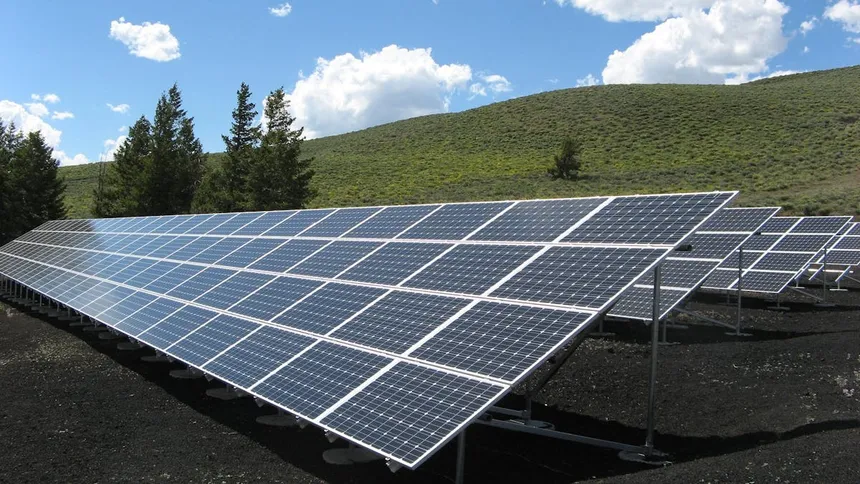
Looking for a power station that can grow with your needs? Expandable power stations let you start with a base unit and add extra battery packs later — no need to buy a massive system upfront or replace everything when you need more capacity.
Whether you’re prepping for blackouts, building out a van, or going off-grid at a cabin, modular systems offer the flexibility that fixed-capacity units can’t match. After researching user experiences across Reddit, forums, and reviews, here are the best expandable power stations worth your money in 2026.
Need help figuring out how much capacity you actually need? Check out our power station sizing guide first.
Quick Comparison: Best Expandable Power Stations
| Model | Base Capacity | Max Expanded | Output | Battery Type | Price |
|---|---|---|---|---|---|
| EcoFlow Delta Pro | 3.6 kWh | 25 kWh | 3,600W | LiFePO4 | $2,699 |
| Bluetti AC300 + B300K | 3.07 kWh | 12.3 kWh | 3,000W | LiFePO4 | $2,499+ |
| Jackery Explorer 2000 Plus | 2 kWh | 24 kWh | 3,000W | LiFePO4 | $1,999 |
| Zendure SuperBase V | 4.6 kWh | 64 kWh | 3,800W | Semi-solid state | $3,999 |
| Bluetti Apex 300 | 2.7 kWh | 10 kWh | 3,840W | LiFePO4 | $1,999 |
| Anker SOLIX F3800 | 3.84 kWh | 26.9 kWh | 6,000W | LiFePO4 | $2,999 |
Best Overall: EcoFlow Delta Pro
The EcoFlow Delta Pro remains the gold standard for expandable power stations. With 3,600Wh base capacity expandable to a massive 25kWh, it handles everything from weekend camping to whole-home backup.
Key Specs:
- Base capacity: 3,600Wh (3.6 kWh)
- Max expansion: Up to 25 kWh with extra batteries
- Output: 3,600W (7,200W surge)
- Solar input: 1,600W
- Battery: LiFePO4
What real users say:
One Reddit user in r/Ecoflow_community noted that “DP + Extra Batt + Smart Generator will take you much further during a power emergency than adding a second DP.” The smart generator integration is a key advantage — you can keep the batteries topped up automatically during extended outages.
Another user mentioned “12kWh with a 3 ton AC running 50% of the time will last around 8 hours on battery” — real-world numbers that help you plan actual capacity needs.
Pros:
- Massive expansion potential (up to 25 kWh)
- Excellent app and smart home integration
- 1,600W solar input for fast off-grid charging
- EPS (Emergency Power Supply) function for UPS use
- Smart generator compatibility
Cons:
- Premium price point
- Heavy (99 lbs base unit)
- Extra batteries are expensive ($2,699 each)
Best for: Homeowners wanting serious backup power, off-grid cabins, and anyone who needs the flexibility to scale up over time.
Curious how EcoFlow stacks up against competitors? See our EcoFlow vs Bluetti comparison or EcoFlow vs Jackery breakdown.
Best Value: Jackery Explorer 2000 Plus
The Jackery Explorer 2000 Plus offers the most flexible expansion in its price range, letting you grow from 2 kWh all the way to 24 kWh by adding battery packs.
Key Specs:
- Base capacity: 2,042Wh
- Max expansion: 24 kWh (with 10 battery packs + parallel units)
- Output: 3,000W (6,000W surge)
- Solar input: 1,200W
- Battery: LiFePO4 (4,000 cycles)
According to WIRED’s long-term review, “Jackery promises 70 percent capacity after 4,000 cycles for the Explorer 2000 Plus and says you can expect a decade of service.” That’s serious longevity.
The expansion flexibility is impressive: “Easily expand power capacity by connecting up to 5 expansion battery packs to an Explorer 2000 Plus, increasing energy from 2kWh to 12kWh or parallel connect 2 units of Explorer 2000 Plus together with 10 expansion battery packs added, expanding the capacity to 24kWh, voltage to 240V, and output to 6000W.”
What real users say:
One Reddit user shared first impressions: “I’ve found two software bugs” — noting that while the hardware is solid, the app could use work. This is a common theme with Jackery’s Plus series. The hardware delivers, but expect some quirks with the software.
Pros:
- Exceptional expansion flexibility (2-24 kWh)
- LiFePO4 with 4,000 cycle lifespan
- 10-year expected service life
- Battery packs support independent solar charging
- More affordable expansion batteries ($899 each)
Cons:
- App has reported bugs
- Charging rate doesn’t increase with expansion (still ~1,800W)
- Heavier system when fully expanded
Best for: RVers, campers, and budget-conscious preppers who want to start small and grow their system over time.
For a deep dive on this unit, read our Jackery Explorer 2000 Plus review.
Best for Whole-Home Backup: Bluetti AC300 + B300K
The Bluetti AC300 is a battery-less inverter that pairs with B300K expansion batteries — a unique approach that maximizes flexibility for home backup installations.
Key Specs:
- Base capacity: 3,072Wh (with one B300K)
- Max expansion: 12.3 kWh (4x B300K batteries)
- Output: 3,000W (6,000W surge)
- Solar input: 2,400W
- Battery: LiFePO4
What real users say:
One ambitious user on r/smarthome shared their setup: “I paired the Bluetti with around 18 panels on the roof I installed myself. I ended up buying 3 B300 batteries and with it am powering a 55-inch flat-screen TV, full-size refrigerator, washer and dryer combo, microwave, toaster, wifi, PS5, roomba combo j7 and s9+ continuously 24/7.” That’s serious home power coverage.
However, there’s a significant caveat. A frustrated user warned: “Bluetti basically screwed its AC300 owners who individually investing $1000s into a system now limited in expansion options by quietly discontinuing the B300 batteries and introducing the less functional B300K.” If you’re buying into the ecosystem, make sure you understand the battery compatibility situation.
Another user noted: “The cables on the AC300 + B300K are obnoxious… Seriously, I hope Bluetti makes new cables for at least the last few releases of their devices.”
And on weight: “The set is very heavy. You won’t easily take it with you to outdoor locations. The battery alone weighs 34 KG.” This is definitely a stationary setup.
Pros:
- High solar input (2,400W)
- True modular design (inverter separate from batteries)
- Can power an entire home with enough batteries
- Split-phase bonding for 240V appliances
Cons:
- B300 discontinued, B300K has compatibility concerns
- Heavy batteries (75 lbs each)
- Cable management is frustrating
- Customer support complaints
Best for: Homeowners wanting a semi-permanent backup power installation with solar integration.
Best for Off-Grid Living: Zendure SuperBase V
The Zendure SuperBase V is the most ambitious expandable system on the market — a massive battery on motorized wheels that can scale up to 64 kWh.
Key Specs:
- Base capacity: 4,608Wh (4.6 kWh)
- Max expansion: Up to 64 kWh with satellite batteries
- Output: 3,800W (7,600W surge)
- Solar input: 3,000W
- Battery: Semi-solid state LiFePO4
GearJunkie’s review noted: “Homeowners and preppers will love the modularity of the Zendure ecosystem, which is easy to install and expand as needed.”
What real users say:
User experiences are mixed. From r/Zendure: “Considering the sale price of these things and awareness of bugs from the aforementioned YouTuber, I consider the rush to start selling these at this stage (since I too am already seeing very obvious firmware bugs) a very poor choice on the part of Zendure.”
Another user was blunter: “Absolutely not worth your trust… support is non-existent.”
Pros:
- Massive expansion potential (64 kWh)
- Motorized wheels for mobility
- Semi-solid state battery technology
- High solar input (3,000W)
- Satellite battery system is innovative
Cons:
- Firmware bugs reported by multiple users
- Customer support concerns
- Very expensive
- Heavy (130 lbs base unit)
Best for: Off-grid cabins, tiny homes, and tech-forward users willing to deal with early-adopter issues for cutting-edge capacity.
Best High-Output: Bluetti Apex 300
The new Bluetti Apex 300 delivers 3,840W of continuous output in a more compact package than the AC300 system.
Key Specs:
- Base capacity: 2,764Wh (2.7 kWh)
- Max expansion: 10 kWh with B500K batteries
- Output: 3,840W
- Solar input: 2,600W
- Battery: LiFePO4
What real users say:
From r/OffGrid: “Bluetti Apex 300 is 2,700 Wh and expandable with the B500K battery up to 10 kWh. 3,840 W output is enough to run power tools like a drill press, sander, or band saw in my workshop without issues.”
Pros:
- Highest continuous output in its class (3,840W)
- Built-in battery (unlike AC300)
- Cleaner cable management than AC300 system
- New B500K battery ecosystem
Cons:
- Newer product with less long-term user data
- B500K batteries are expensive
- Not compatible with older B300/B300K batteries
Best for: Workshops, power tool users, and anyone needing high continuous output with expansion flexibility.
Best for Extreme Capacity: Anker SOLIX F3800
The Anker SOLIX F3800 pushes expansion to another level with 6,000W output and up to 26.9 kWh capacity.
Key Specs:
- Base capacity: 3,840Wh
- Max expansion: 26.9 kWh
- Output: 6,000W (9,000W surge)
- Solar input: 2,400W
- Battery: LiFePO4
Pros:
- Highest output on this list (6,000W continuous)
- Serious expansion capacity
- Anker’s reputation for quality
- Home backup panel integration
Cons:
- Premium pricing
- Newer to market, less user feedback
- Very heavy system when expanded
Best for: Whole-home backup users who need maximum output and aren’t constrained by budget.
Why Choose an Expandable Power Station?
Start small, grow as needed. The biggest advantage of modular systems is financial flexibility. Instead of dropping $5,000+ on a massive system upfront, you can start with a base unit and add batteries as your budget and needs allow.
Future-proof your investment. Your power needs might change. Maybe you add a home office, buy an EV, or decide to go off-grid more often. Expandable systems adapt without requiring you to sell and replace your entire setup.
Redundancy and flexibility. With multiple battery modules, you can potentially use some while charging others, or move capacity between locations.
What to Consider Before Buying
Battery Compatibility
This is critical. As one Bluetti user learned the hard way, manufacturers sometimes discontinue battery models or change connectors. Before investing in an ecosystem, research:
- Current battery availability
- Compatibility between old and new battery models
- Whether the manufacturer has a history of supporting products long-term
Weight and Portability
Expandable systems are inherently heavier than fixed-capacity units. A Bluetti user noted their B300 battery alone weighs 34 kg (75 lbs). If you need portability, consider:
- How often you’ll move the system
- Whether you need wheels (Zendure SuperBase V has them)
- The weight of individual components vs. the total system
Charging Rate Limitations
Adding batteries doesn’t always increase charging speed. The Jackery 2000 Plus, for example, maintains roughly the same 1,800W charging rate regardless of how many batteries you add. Factor this into your solar panel planning.
True Cost of Expansion
Calculate the cost per kWh for expanded systems:
- Jackery 2000 Plus: ~$440/kWh with expansion batteries
- EcoFlow Delta Pro: ~$750/kWh with extra batteries
- Bluetti AC300: ~$500/kWh with B300K batteries
For budget options without expansion, see our best portable power stations under $500 or under $1000 guides.
FAQs
Can I mix different battery sizes in an expandable system?
Generally, no. Most systems require matching batteries (e.g., all B300 or all B300K). Mixing can cause balancing issues or may not be supported at all. Always check manufacturer specifications.
How long do LiFePO4 batteries last in these systems?
Most expandable systems use LiFePO4 batteries rated for 3,000-4,000 cycles. At one cycle per day, that’s 8-10+ years of service. The Jackery 2000 Plus, for example, retains 70% capacity after 4,000 cycles.
Can expandable power stations power a whole house?
Yes, with enough capacity and proper installation. Systems like the EcoFlow Delta Pro (up to 25 kWh) or Anker SOLIX F3800 (up to 26.9 kWh) can run most homes for 12-24+ hours depending on usage. You’ll need a transfer switch or panel for hardwired connection.
Is it cheaper to buy all batteries at once or expand later?
Buying in bundles is usually 10-20% cheaper than adding batteries individually later. However, if budget is tight, starting small and expanding is still more cost-effective than buying a larger fixed-capacity unit upfront.
Do I need special wiring to use an expandable system for home backup?
For portable use, no. For whole-home integration, you’ll need either a transfer switch (DIY-friendly) or professional installation for systems like the EcoFlow Whole Home Backup or Bluetti Sub-Panel solutions.
Final Verdict
Best overall: The EcoFlow Delta Pro offers the best balance of capacity, expansion potential, and ecosystem support — if you can afford the premium.
Best value: The Jackery Explorer 2000 Plus delivers exceptional flexibility at a more accessible price point, with expansion from 2 to 24 kWh.
Best for home backup: The Bluetti AC300 + B300K system, despite its quirks, remains the go-to for serious home power coverage with solar integration.
For most users, we recommend starting with the Jackery 2000 Plus or EcoFlow Delta Pro as your base unit, adding one expansion battery, and growing from there as your needs become clearer.
Already have a non-expandable unit? Check our best portable power stations roundup to see how your current system compares, or explore LiFePO4 power stations for maximum longevity.